Table of content
The Video-Based Customer Identification Process (VCIP) is a customer identification method wherein an authorized official from the regulated entity (RE) engages in facial recognition and customer due diligence (CDD) through video interaction with the customer. This secure, live, and informed-consent-based interaction gathers identification information for CDD purposes. Additionally, it verifies the customer-submitted information independently, all while maintaining a comprehensive audit trail of the entire process.
VCIP, introduced by the RBI, is a real-time, end-to-end encrypted customer identification and verification procedure based on video. This innovative process allows banks and regulated financial institutions to perform paperless KYC through a video call, guided by a trained official.
Explore Pixl Video KYC Solution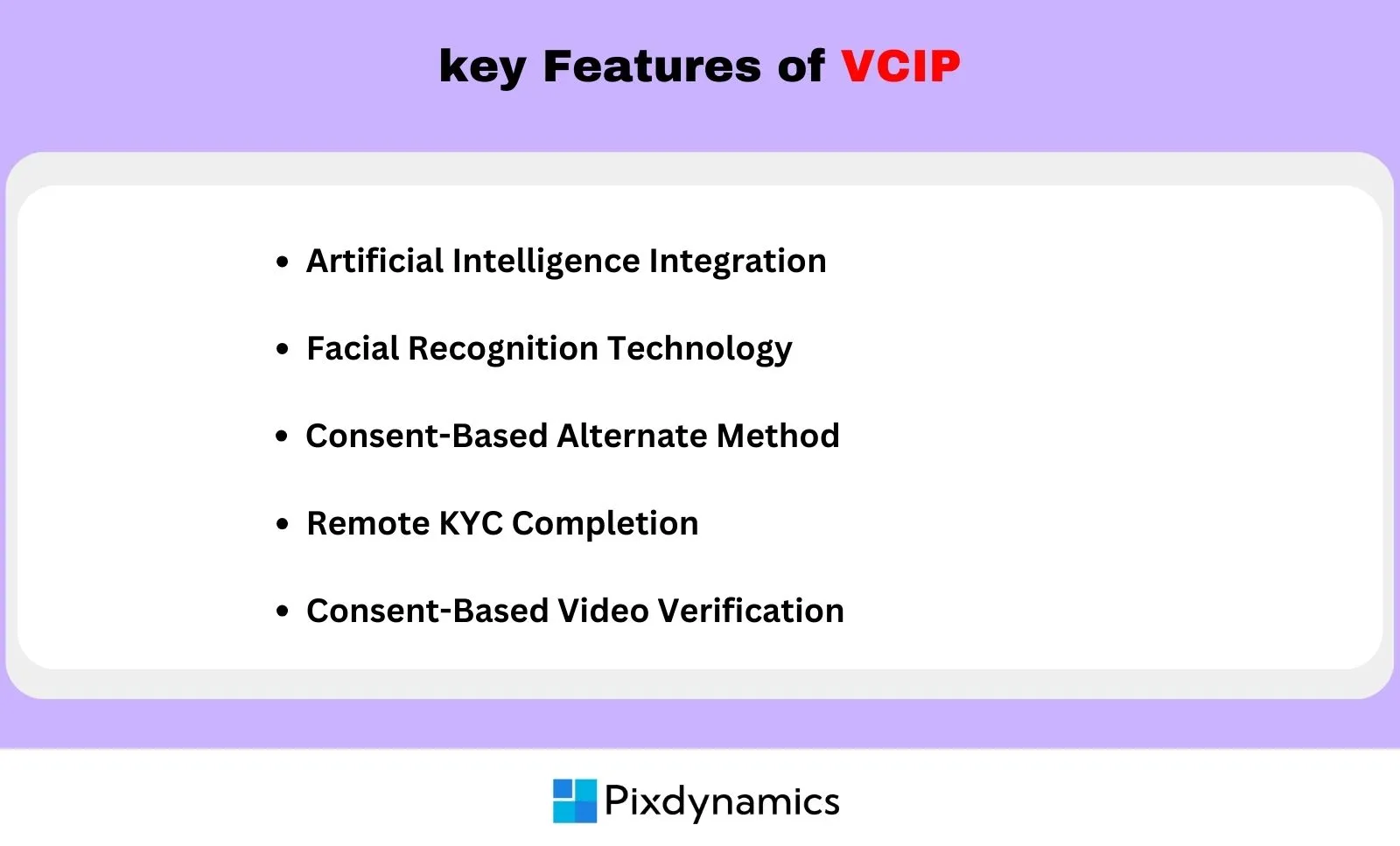
What is the Purpose of VCIP in Banking?
The purpose of Video-Based Customer Identification Process (VCIP) in banking is to streamline and enhance the customer onboarding process through secure and efficient means. VCIP allows banks and financial institutions to verify the identity of customers remotely, eliminating the need for physical presence.
The key objectives of VCIP in banking include
- Digital Onboarding : VCIP facilitates entirely online onboarding processes, aligning with the digital transformation trends in the banking sector.
- Efficiency : The process is designed to be quick, completing KYC within a few minutes, offering an instant way to open bank accounts.
- Regulatory Compliance VCIP adheres to regulatory guidelines, ensuring that customer identification is conducted securely and in compliance with the Reserve Bank of India's stipulations.
- Cost-EffectiveBy digitizing the identification process , V-CIP reduces the costs associated with traditional methods and paperwork.
Key Aspects of VCIP
- Customer Consent : The VCIP process begins with the customer's explicit consent to undergo video-based identification, ensuring compliance with privacy and regulatory requirements.
- Data Capture : An official captures a live video and photograph of the customer during the VCIP session, providing visual documentation for identity verification.
- Document Verification : In the case of RBI's VCIP, the customer's Aadhaar card is often used for verification, emphasizing the importance of validating official documents during the process.
- Amendments and Regulations : The VCIP process is subject to amendments and regulations, as seen in the RBI's efforts to cover various topics related to Video KYC, V-CIP, and KYC updation through regulatory changes.
- Digital KYC : VCIP is part of the broader landscape of digital KYC, which involves verifying Officially Valid Documents (OVDs) or Aadhaar through digital means, enhancing the efficiency of the customer identification process.
- Identity Verification Aspects : VCIP addresses various aspects of customer identity, contributing to a robust and secure verification process within the digital realm.
VCIP Process Step by Step
- Initiation with Consent : The VCIP process begins with the official initiating a live video interaction with the customer. The customer's explicit consent is obtained to ensure compliance and transparency.
- Data Capture : During the video interaction, a live video and photograph of the customer are captured. This step provides visual documentation for identity verification , enhancing the efficiency of the process.
- Aadhaar Verification : The customer's Aadhaar card is a key document used for verification. The information provided by the customer is cross-verified with the Aadhaar details to ensure accuracy and reliability in the identification process.
- Secure Live Interaction : The entire interaction is conducted securely, ensuring it is live and based on the informed consent of the customer. This live element enhances security and reduces the risk of fraudulent activities during the identification process.
- Paperless and Contactless : VCIP is designed to be a paperless and contactless process, aligning with the modern trend toward digital and seamless customer experiences. This reduces the time and effort required for customer onboarding.
- RBI Approval The VCIP procedure is approved by regulatory bodies such as the Reserve Bank of India (RBI). This regulatory endorsement ensures that the process adheres to the necessary standards and compliances, further bolstering the security of customer identification.

Traditional KYC vs VCIP KYC
Traditional KYC processes rely on physical document submission and in-person verification. This method involves customers providing documents like passports and utility bills, necessitating a visit to a physical location. The process is time-consuming, often causing delays in onboarding and transactions. Additionally, traditional KYC may pose security risks due to the handling of physical documents.
In contrast, Video-based Customer Identification Process (VCIP) KYC represents a paradigm shift by leveraging technology for remote verification. VCIP enables customers to undergo the identification process through video interactions, eliminating the need for physical presence. This approach not only enhances accessibility but also streamlines the verification process, making it more efficient and reducing the time required for onboarding. The Reserve Bank of India has officially recognized VCIP, emphasizing its role in promoting a seamless and secure customer experience.
VCIP (Video Customer Identification Process) is implemented as follows
The VCIP KYC process encompasses several key stages
- Determination of Customer's Risk Profile : Assessing and establishing the risk profile associated with the customer.
- Screening Against Sanctions and Negative Lists : Conducting checks to ensure the customer is not listed on sanction or negative lists.
- Monitoring of Account Activity : Continuously overseeing the customer's account behavior for any unusual or suspicious activity.
- Ongoing Updating of KYC Information : Regularly updating and maintaining the customer's KYC information.
The VCIP, denoting the Verified Customer Identification Program, is an initiative introduced by the Virtual Currency Industry Partnership (VCIP). This program aims to ensure accurate identification and verification of individuals utilizing virtual currencies. To partake in VCIP, businesses must complete an online application. Upon approval, specific customer details such as name, address, date of birth, and government-issued ID number are submitted to VCIP for verification.
Once customer information is verified, businesses are assigned a unique VCIP ID number for each customer, which is mandatory for all subsequent virtual currency transactions.
Participation in VCIP is voluntary, but it enables businesses to demonstrate their commitment to Anti-Money Laundering (AML) and Know Your Customer (KYC) compliance, reinforcing trust with customers.

RBI V-CIP Requirements Checklist
The Reserve Bank of India has laid down detailed operational and security conditions that regulated entities must meet to perform a valid V-CIP. Here is a checklist of the key RBI requirements:
- Trained, authorized official : The V-CIP session must be conducted by an official specifically trained for video-based identification, not any staff member.
- Customer consent : Explicit, informed consent must be obtained from the customer before starting the video session.
- Live, uninterrupted session : The process must be a single, continuous, real-time video interaction — pre-recorded videos are not permitted.
- Geo-tagging and location capture : The customer's live location (geo-tagging) must be captured during the session to confirm they are physically present in India.
- Liveness detection : The process must include checks to confirm the customer is physically present and not using a photograph, video, or mask.
- Officially Valid Document (OVD) verification : The customer's Aadhaar (via XML/QR or Digilocker) or other OVD must be verified on-screen during the call.
- Random questioning : The official must ask random, unscripted questions to establish the customer's identity, rather than following a fixed script.
- Photograph capture : A clear photograph of the customer must be captured during the live session for record-keeping.
- IP address and timestamp logging : The customer's IP address and the date/time of the session must be recorded as part of the audit trail.
- End-to-end encryption : The video call and all data captured during it must be encrypted and securely stored on servers located in India.
- Complete audit trail : The entire recording, along with supporting documents and logs, must be retained and made available for regulatory audits.
- Business hours operation : V-CIP can only be carried out during the regulated entity's official business hours.
V-CIP offers several advantages for businesses, including
- Efficient Customer Identity Verification : V-CIP KYC enables businesses to swiftly and easily confirm the identity of their customers, serving as a deterrent to fraud and safeguarding the business against financial risks.
- Compliance with Legal and Regulatory Requirements : V-CIP KYC aids businesses in meeting legal and regulatory obligations. By verifying customer identities, it ensures adherence to anti-money laundering (AML) and countering-the-financing-of- terrorism (CFT) regulations.
- Time and Cost Savings : V-CIP KYC can save both time and money for businesses. By verifying customer identities upfront, it helps circumvent the expensive and time-consuming process of manual checks at a later stage.
- Consistent Customer Experience : V-CIP KYC provides a uniform and seamless experience for customers. Electronic identity verification contributes to a smoother customer journey, enhancing overall satisfaction.
- Enhanced Customer Trust : The process of verifying identities through V-CIP KYC demonstrates a commitment to customer security and privacy. This, in turn, builds trust and loyalty, fostering repeat business and referrals.
FAQs
What is VCIP in banking?
VCIP (Video-based Customer Identification Process) is an RBI-approved method that allows banks and NBFCs to verify a customer's identity remotely through a live video call instead of an in-person visit.
Is VCIP legally valid in India?
Yes. VCIP is officially recognized by the Reserve Bank of India as a valid method of customer identification under KYC guidelines, provided it follows RBI's prescribed process and data security norms.
How long does a VCIP verification take?
A VCIP session is designed to be quick, typically completing customer identification and onboarding within a few minutes.
What documents are required for VCIP?
VCIP commonly uses the customer's Aadhaar card as the primary Officially Valid Document, cross-verified with the details and live photograph captured during the video interaction.
How is VCIP different from traditional KYC?
Traditional KYC requires physical document submission and an in-person visit, while VCIP is a paperless, contactless process completed entirely through a secure, consent-based video interaction.
Conclusion
V-CIP KYC introduces a fresh approach for businesses seeking swift and reliable customer identity verification. This secure method is well-suited for businesses requiring efficient identity confirmation. V-CIP KYC serves as an excellent safeguard for online users' identities and personal details. Banks, by verifying this information, play a crucial role in ensuring the safety and security of online activities. This article aims to offer insights into the V-CIP KYC process, emphasizing its significance in helping customers maintain online safety.